

How Many First Aiders Do You Need at Work?
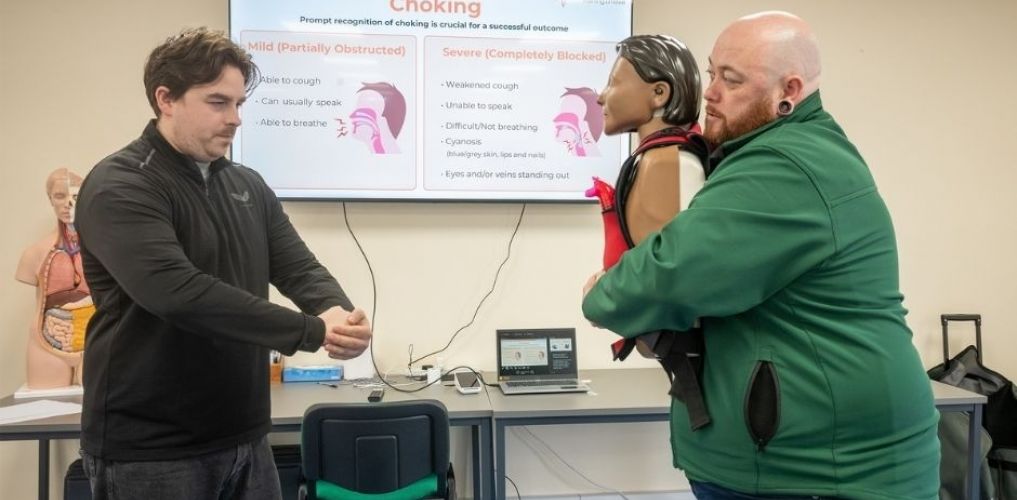
There is no legal ratio of first aiders to staff in the UK. The Health and Safety (First Aid) Regulations 1981 require every employer to provide adequate and appropriate first aid provision, and leave the number to the employer.
You decide it through a first aid needs assessment. Two businesses of the same size can arrive at different, equally correct answers.
Does the law set a minimum number of first aiders?
No. The Regulations use the words adequate and appropriate rather than a figure.
HSE has never published a binding ratio, and the tables that circulate online are suggestions from HSE's own guidance, not thresholds.
If a training provider gives you a number without asking about your workplace, they are guessing.
The duty itself has no size threshold. It applies whether you employ 200 people or one (HSE).
What is a first aid needs assessment?
It is a written assessment of what could go wrong at your workplace and what provision that calls for.
It looks at your hazards, your headcount, your site layout, your shift arrangements and your distance from emergency services.
The output is a decision about equipment, facilities and how many trained people you need. Nobody signs it off for you.
It is your document, and an inspector will ask to see the reasoning behind your numbers rather than the numbers themselves.
What should the assessment actually cover?
Six things drive the answer more than headcount does.
- Hazards. Machinery, chemicals, working at height, vehicles, electricity, food preparation.
- Accident history. What has already happened on your site, and how often.
- Site layout. Multiple floors, separate buildings, or a large yard all extend the time it takes a first aider to reach someone.
- Working patterns. Cover is needed on every shift, not on the day shift alone.
- Lone and travelling workers. People who work away from the main site need their own provision.
- Vulnerable people. Young workers, people with known medical conditions, members of the public on site.
How does absence change the number?
More than most employers expect.
A single first aider covers nothing during annual leave, sickness or training days. Provision has to hold when people are away, so the practical minimum for continuous cover is usually more than one. The same applies across shifts.
A first aider on days does not cover a night shift, and a certificate held by someone who has left the business covers nobody at all.
Which course do the people you appoint need?
That depends on the risk level of the work.
Low risk workplaces such as offices, shops and small retail units are generally served by Emergency First Aid at Work, a one day qualification.
High risk workplaces such as construction sites, warehouses, manufacturing and engineering usually need First Aid at Work, which runs over three consecutive days.
Both certificates are valid for three years. Where the assessment shows little risk and few staff, an appointed person with responsibility for the first aid kit and for calling emergency services may be enough, though they cannot give treatment.
Can you have too many first aiders?
No, and there is a practical case for having more than the minimum.
Extra trained people absorb absences, cover shift changes and reduce the chance that the one qualified person is the casualty. Cost is the usual constraint.
Training a whole team together on one date is cheaper per head than sending individuals on separate dates, and it keeps everyone on the same protocols.
How do you train more than 12 people?
The trainer to delegate ratio is 1:12, set by the awarding body so every delegate is assessed individually on the practical skills.
A team of 24 is therefore trained either on two separate dates or on one date with two trainers working in parallel. The course length does not change either way.
What records should you keep?
Keep the needs assessment itself, the certificates of everyone you have appointed, and a note of expiry dates.
Certificates last three years, and a lapsed certificate is the most common gap inspectors find. An accident book is a separate requirement.
Records should be retained and kept in line with data protection obligations.
Frequently asked questions
Do I need a first aider if I only employ two people?
The duty applies to every employer with no minimum staff threshold. A very small, low risk business may satisfy it with an appointed person and a stocked first aid kit rather than a trained first aider, but the assessment still has to be done.
Does a first aid certificate cover more than one employer?
Yes. The qualification belongs to the individual, not the business. Someone who holds a valid certificate can be appointed by a new employer without retraining, provided the certificate matches the risk level of the new workplace.
Are self employed people covered by the Regulations?
Self-employed people have a duty to provide adequate first aid equipment for their own use while working. Where they work alongside others, the arrangements are usually agreed with the site operator.
Does the number change if members of the public are on site?
The Regulations cover employees, but HSE encourages employers to account for anyone else on the premises. Schools, shops, leisure sites and venues usually build the public into the assessment.
How often should the assessment be reviewed?
Whenever the work changes, after an incident, and periodically otherwise. A site that has taken on new machinery or moved premises has changed its risk profile.
Can first aid training be delivered at our own premises?
Yes. In house delivery is priced per group rather than per delegate, for up to 12 delegates on one date.
References
Legislation.gov.uk: Health and Safety (First Aid) Regulations 1981
Health and Safety Executive: First aid at work
Health and Safety Executive: Selecting a first aid training provider: A guide for employers