

Fire Safety Training in the UK | Law, Best Practice and What Every Workplace Should Know
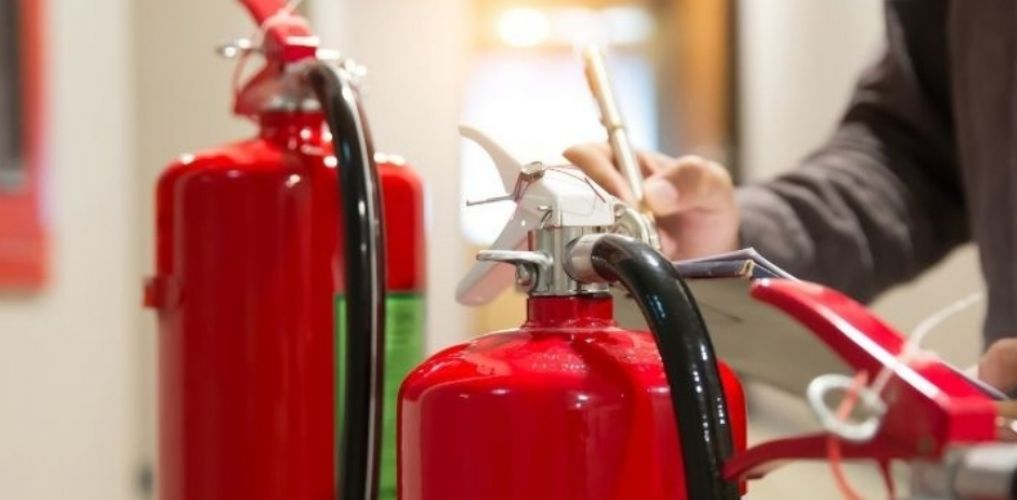
Fire safety training is a legal requirement for almost every workplace in the UK.
Under the Regulatory Reform (Fire Safety) Order 2005, employers and other responsible people must give staff the information, instruction and training they need to stay safe if a fire breaks out at work.
This guide explains what the law expects, what good training should cover, who is responsible, and how Safe Haven Training supports UK businesses with nationally recognised fire safety courses.
Whether you run a small shop, a busy office, a school or a large site with several occupiers, the same principle applies.
The people inside the building need to know what to do when a fire starts.
What the Law Says About Fire Safety Training
In England and Wales, the main piece of fire safety law is the Regulatory Reform (Fire Safety) Order 2005, often called the "Fire Safety Order."
It sets the standard for general fire pre cautions in most non domestic premises, including offices, shops, schools, factories, ware houses, restaurants, care homes and hotels.
Under the Order, the "responsible person" must:
- Carry out a fire risk assessment
- Take steps to reduce the risk of fire starting
- Put practical fire precautions in place
- Provide fire safety training to staff during normal working hours
- Repeat the training regularly
The responsible person is usually the employer, owner or occupier of the building.
In a multi occupied building, every responsible person has a duty to work together and share what they know about fire risks on site (GOV.UK).
Who Needs Fire Safety Training at Work?
Almost every employee in the UK needs some form of fire safety training.
Government guidance is clear that training must be given to staff when they start their job and then repeated from time to time afterwards (GOV.UK).Some staff need more training than others.
People who take on a specific role during a fire for example, Fire Marshals or Fire Wardens, need extra training to carry out those duties safely.
The right level of training depends on:
- The size and layout of the building
- The number of people working in it
- The type of work being carried out
- Any unusual fire risks on site, such as flammable substances or hot processes
Training is not a one off task. It needs to be refreshed when new staff start, when the building changes, or when new equipment or materials come into the workplace.
What Should Fire Safety Training Cover?
National guidance sets out the topics that staff training should include. While the published guide focuses on offices and shops, the same principles apply across most UK workplaces (GOV.UK).
Good fire safety training should cover the following:
| Topic | Why It Matters |
|---|---|
| What to do on discovering a fire | Staff need to act quickly and calmly |
| How to raise the alarm | The whole building must be warned in time |
|
What to do on hearing the fire alarm
|
Confusion costs precious minutes |
| How to alert visitors and members of the public | Visitors will not know the building |
| Where the escape routes are | Including routes not used every day |
| How to open emergency exit doors | Exits should open easily without a key |
| The location and use of firefighting equipment | Only trained staff should attempt to tackle a fire |
| Why fire doors must stay closed | Closed fire doors slow the spread of fire and smoke |
| Why lifts must not be used | Lifts can trap people during a fire |
| The risks of flammable or hazardous substances | These materials change how a fire behaves |
| Good housekeeping habits | Most workplace fires can be prevented |
Training should also be tested through regular fire drills.
A fire drill is a practical way to check that staff know the escape routes and can leave the building safely without panic.
How Often Should Fire Safety Training Take Place?
The Fire Safety Order does not set a fixed time period for refresher training.
Instead, it expects training to be repeated "periodically where appropriate" (GOV.UK).
In practice, most UK workplaces refresh fire safety training every one to three years.
Training should be repeated sooner if:
- New staff start work
- The layout of the building changes
- New equipment, stock or materials are brought in
- A fire or near miss highlights a gap in training
- The fire risk assessment is reviewed and updated
For Fire Marshals and Fire Wardens, an annual refresher is widely considered good practice.
The exact frequency should always be guided by the findings of the fire risk assessment.
Browse our fire safety courses and book online today
Fire Marshals and Fire Wardens | A Step Further
In many workplaces, the responsible person nominates one or more staff members to take on extra fire safety duties. These people are usually called Fire Marshals or Fire Wardens.
A Fire Marshal helps prevent fires, supports a safe evacuation, and acts as the link between staff and the fire and rescue service in an emergency. The role is more than a regular employee duty. It needs structured training.
Typical Fire Marshal duties include:
- Carrying out fire safety checks around the building
- Helping people leave the building during an evacuation
- Checking that escape routes are clear and exits are usable
- Using firefighting equipment if it is safe to do so
- Briefing the fire and rescue service when they arrive
Government guidance recommends that staff with a supervisory role in a fire emergency receive additional training on top of basic fire safety awareness (GOV.UK).
For this reason, many UK businesses choose a Level 2 Fire Marshal qualification for their nominated staff.
What Does the Responsible Person Need to Provide?
The Regulatory Reform (Fire Safety) Order 2005 places clear duties on the responsible person when it comes to training.
Training must:
- Take account of the findings of the fire risk assessment
- Be given during normal working hours
- Explain the emergency procedures for the premises
- Reflect the work activity and the duties of each staff member
- Be repeated regularly
- Be easy to understand for all staff, including those with disabilities or those whose first language is not English
- Be tested through fire drills
- The same rules apply to shift workers, lone workers, contractors and temporary staff.
Maintenance staff and cleaners working outside normal hours must also be given the information they need to stay safe (GOV.UK).
What Happens If a Business Does Not Train Its Staff?
Fire safety law is enforced by the local fire and rescue service in most premises. Where the enforcing authority finds that a business has not provided adequate training,
it can issue:
- An enforcement notice requiring improvements
- A prohibition notice restricting use of all or part of the building
- An alterations notice for higher risk premises
Failure to comply with the Order is a criminal offence. In serious cases, businesses can face significant fines or, where lives are put at risk, imprisonment.
Beyond the legal consequences, the human cost of an untrained workforce is far greater.
A small fire that staff cannot manage in its early stages can grow into a major incident in minutes.
How Safe Haven Training Supports UK Workplaces
Safe Haven Training delivers two nationally recognised fire safety courses, designed to meet the needs of both general staff and those with a Fire Marshal role.
The Level 1 Award in Fire Safety Awareness is a half day course suitable for staff in any workplace.
It covers the foundations: how fires start, how they spread, how to raise the alarm, and how to leave the building safely.
For most businesses, this is the right starting point for the wider workforce.
Fire Marshal Training is a one day course in Fire Safety training.
It is designed for nominated Fire Marshals and Fire Wardens who need a fuller understanding of fire safety management, emergency planning and evacuation.
The course includes practical use of fire extinguishers where the venue allows. Both courses are accredited through FAIB and Qualsafe Awards (upon request).
Certificates are issued within 48 hours of course completion, and our 99% pass rate means learners arrive with confidence and leave with a qualification they can rely on.
Onsite or Open Courses? Choosing What Works
Safe Haven Training delivers fire safety training in two main ways. Open courses run at venues across the UK, and onsite courses come directly to the workplace.
Onsite training is often the better option for larger teams, because it can be shaped around the building, the people, and the specific risks present.
For businesses operating across more than one site, training can be arranged to fit shift patterns and busy schedules.
Evening and weekend dates are available where needed.
Talk to Safe Haven Training about onsite fire safety training for your team
References
1. GOV.UK (2023): Fire safety risk assessment: offices and shops
2. GOV.UK (2005): Regulatory Reform (Fire Safety) Order 2005