

First Aid Certificate for Work | What UK Employers Need to Know?
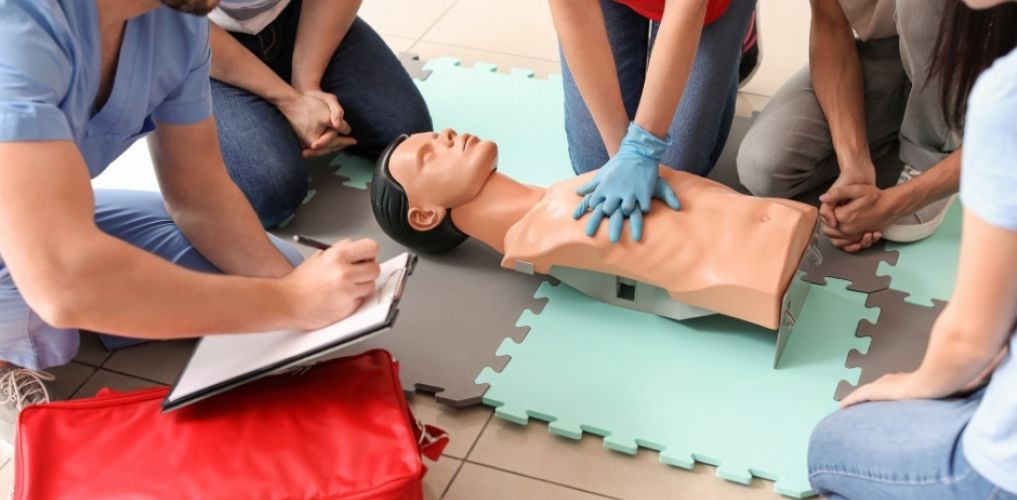
A first aid certificate allows an employee to act as a workplace first aider, but only if the employer has carried out a proper first aid needs assessment and provided adequate and appropriate arrangements under UK law.
Under the Health and Safety (First Aid) Regulations 1981, employers must:
Provide suitable first aid equipment and facilities
Provide an adequate number of trained personnel
Base their decision on a workplace first aid needs assessment
Source: HSE First Aid Legislation
Simply having a certificate is not enough. Employers must ensure the training level matches workplace risks, health & safety, and insurance requirements.
Find a First Aid Course Near You
If you work in a school, nursery or early years settings, check out the updated EYFS guidelines in the blog below.
What Does the Law Actually Require?
The legal foundation is the Health and Safety (First Aid) Regulations 1981.
The core requirement is simple in wording but important in interpretation:
Employers must provide adequate and appropriate first aid arrangements.
This includes:
- First aid equipment
- First aid facilities
- Suitable trained first aider
The law does not give fixed numbers for every business. It requires employers to assess their own workplace.
If you're looking for first aid training at your site or venue.
For more details, read our guide on venue requirements.
Step 1: The First Aid Needs Assessment (The Most Important Part)
Everything starts here.
The HSE makes it clear that employers must assess:
- The type of work being carried out
- Workplace hazards
- The size and distribution of the workforce
- Shift patterns
- Remote, travelling or lone workers
- Distance from emergency services
- Absence cover for trained first aiders
Source: HSE: Assessing Your Business Needs
This assessment determines:
- Whether you need an appointed person or a trained first aider
- How many first aiders are required
- Whether EFAW or FAW training is appropriate
Without this assessment, employers cannot demonstrate compliance.
Types of First Aid Personnel in the Workplace
The HSE recognises three levels of workplace first aid provision:
Appointed Person
- Takes charge of first aid arrangements
- Calls emergency services
- Looks after first aid equipment
- Does not require formal first aid training
Suitable for very low risk workplaces.
Emergency First Aid at Work (EFAW)
- 1 day qualification
- Suitable for low risk environments
- Covers CPR, choking, bleeding, shock, seizures
Common in offices, retail and smaller workplaces.
First Aid at Work (FAW)
- 3 day qualification
- Required for higher risk workplaces
- Covers wider injuries and illnesses
- Includes more in depth training
Often needed in construction, manufacturing, engineering and higher hazard environments.
Source: HSE: First Aid
How Many First Aiders Does an Employer Need?
There are no strict legal numbers.
However, HSE guidance suggests minimum levels based on hazard type and workforce size.
Lower risk workplaces (offices, shops)
- Under 25 employees: 1 appointed person
- 25 - 50 employees: 1 EFAW trained first aider
- 50+ employees: 1 FAW trained first aider per 100 employees
Higher risk workplaces (construction, manufacturing)
- Under 5 employees: 1 appointed person
- 5 - 50 employees: 1 EFAW trained first aider
- 50+ employees: 1 FAW trained first aider per 100 employees
But this is guidance only. The needs assessment may justify more.
Can an Employer Rely on Any First Aid Certificate?
Since 2013, the HSE no longer approves first aid training providers (except offshore specialists).
Instead, employers must ensure they choose a competent training provider like Safe Haven Training.
When selecting a provider, employers should check:
- Trainer qualifications
- Quality assurance systems
- Syllabus content
- Certification standards
- Assessment processes
The responsibility sits with the employer.
Is First Aid Required for the Public?
The regulations legally apply to employees only.
However, HSE strongly recommends considering first aid provision for:
- Members of the public
- Visitors
- Customers
- Pupils
This is particularly important for schools, hospitality, retail and public venues.
Emergencies can happen any time; first aid can save lives when it matters the most.
What About Mental Health First Aid?
HSE guidance recognises that mental ill health should be considered in your needs assessment.
Employers may decide to:
- Provide mental health awareness training
- Appoint mental health trained first aiders
- Implement wellbeing support systems
There is no mandatory requirement, but it should be considered where appropriate.
What Happens If a Certificate Expires?
If a first aid certificate expires:
- The individual is no longer considered competent to act as a workplace first aider
- The employer may fall out of compliance if no other trained first aider is available
Certificates for EFAW and FAW are valid for three years.
The following guides will help you.
How Long Is My First Aid Certificate Valid For?
First Aid Certificate Renewal vs Full Requalification
Annual refresher training is strongly recommended by the HSE.
What Employers Must Document
While the law does not require written documentation of the needs assessment, HSE recommends keeping records to demonstrate compliance.
Employers should document:
- Risk assessment findings
- Number of first aiders
- Type of training provided
- First aid kit checks
- Incident records
This protects both the employer and employee.
Using Your First Aid Certificate at Work | Key Takeaways
For employees:
- Your certificate allows you to act as a workplace first aider if your employer designates you appropriately.
For employers:
- Certification alone is not enough.
- You must carry out a needs assessment.
- You must provide adequate equipment.
- You must ensure training matches workplace risks.
- You must maintain certification validity for your staff
Compliance is risk based, not tick box based.
Why Choosing the Right Training Provider Matters
Because the HSE no longer approves providers directly, employers must demonstrate due diligence.
At Safe Haven Training:
- We deliver EFAW and FAW courses aligned with HSE guidance
- We follow a regulated syllabus and quality assurance processes (FAIB & OFQUAL certified courses)
- We support employers with understanding compliance
- We provide requalification and refresher options
Most importantly, we focus on practical competence, not just certification.
Final thought
A first aid certificate is more than a qualification. It is part of a wider legal framework designed to ensure employees receive immediate attention if injured or taken ill at work.
When used correctly and supported by a proper needs assessment, it protects:
- Your staff
- Your business
- Your legal compliance
- And potentially someone’s life