

What Should Be in Your Workplace First Aid Kit? A UK Employer's Guide
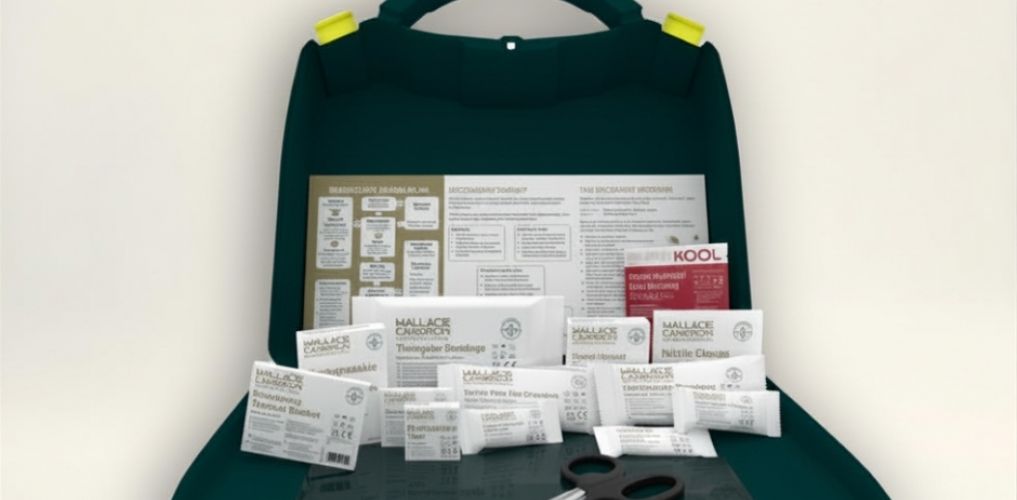
What is an HSE compliant first aid kit?
An HSE compliant first aid kit is a workplace kit stocked in line with the Health and Safety Executive's guidance and, where appropriate, the British Standard BS 8599 1.
Every UK employer needs one. The Health and Safety (First Aid) Regulations 1981 require employers to provide adequate and appropriate equipment, facilities, and personnel so employees can be given imme-diate help if they are injured or taken ill at work (HSE).
The HSE does not prescribe a single fixed kit for every workplace. Instead, it expects employers to carry out a first aid needs assessment and stock their kit accordingly (HSE).
A small low risk office will need a very different kit from a construction site or a busy manufacturing floor. Getting this right matters. A properly stocked, correctly sized kit is one of the simplest ways to meet your legal duty and protect your team in the moments that count.
What does the HSE actually require?
The 1981 Regulations apply to every workplace in Great Britain, regardless of size. Even a sole trader has a duty to assess their own first aid provision.
The HSE guidance is clear on three core points (HSE):
- Every employer must provide first aid equipment, facilities, and trained personnel
- The level of provision must be based on a workplace needs assessment
- Equipment must be suitable, sufficient, and accessible
The HSE is explicit that by law a kit does not have to meet the British Standard, but recommends that buyers look for BS 8599 and check the contents match what the needs assessment identifies (HSE).
In practice, most reputable kit suppliers in the UK build to BS 8599 1 as the working benchmark.
Carrying out a first aid needs assessment
A needs assessment helps you decide how many kits you need, what size they should be, and how many trained first aiders to appoint.
The HSE recommends considering the nature of the work, workplace hazards, the size of your organisation, the spread of your workforce, and your accident history (HSE).
The table below, used in our training sessions, summarises the typical baseline for low risk and high risk workplaces.
| Risk Level | Number of Employees | First Aid Kit | Minimum First Aid Personnel |
|---|---|---|---|
| Low Risk (shops, offices, libraries) | 1 - 24 | 1 Small | 1 Appointed Person |
| 25 - 49 | 1 Medium | 1 Efaw Trained First Aider | |
| 50+ | 1 Large per 100 employees | 1 FAW trained first aider per 100 employees | |
| Higher Risker (construction, warehouses, factories) | 1 - 4 | 1 Small | 1 Appointed Person |
| 5 - 49 | 1 Medium | 1 EFAW or FAW trained first aider | |
| 50+ | 1 Large per 50 employees | 1 FAW trained first aider per 50 employees |
These figures are a starting point, not a ceiling. Workplaces with remote workers, lone workers, shift patterns, or particular hazards may need extra provision.
Your needs assessment should drive the final call.
What should be in your first aid kit?
The HSE gives a suggested contents list for low risk workplaces, but recommends following BS 8599b1 for a more comprehensive workplace kit (HSE).
The standard sets out the components that should appear in every workplace kit, with quantities scaled to the size of the kit (BSI).
A BS 8599 1 compliant workplace first aid kit contains the following items:
- Guidance leaflet
- Contents list
- Medium sterile dressings
- Large sterile dressings
- Triangular bandages
- Sterile eye pad dressings
- Assorted washproof plasters
- Saline cleansing wipes
- Adhesive tape roll
- Nitrile disposable gloves
- Finger sterile dressings
- Resuscitation face shield
- Foil blanket
- Burn dressing
- Shears
- Conforming bandage
Choosing the right kit size
Higher risk workplaces may also need to supplement standard kits with additional components based on the hazards identified.
BSI notes that workplaces with unusual hazards, such as those using hydrofluoric acid, should add appropriate specialist components (BSI).
Tablets and medication should not be included in a workplace first aid kit.
The HSE is clear that first aiders should not give medication, including paracetamol, as part of workplace first aid (HSE).
Does my workplace needs a Defibrilator?
AEDs are not a legal requirement in most workplaces, but they are increasingly expected in larger sites, public facing premises, and any workplace where the needs assessment identifies a real risk of sudden cardiac arrest.
If your organisation has an AED on site, your appointed persons and first aiders should know exactly where it is, how to access it, and how to use it.
Practical AED training is built into our Emergency First Aid at Work and First Aid at Work courses.
How often should first aid kits be checked?
There is no fixed legal interval, but the HSE recommends checking your kit regularly so that contents are within date, sealed, and fully stocked (HSE).
Many sterile items carry expiry dates.
For non sterile items without dates, you should check they are still fit for purpose.
Most workplaces find a monthly check works well. A simple stock card kept inside the kit, with a date and signature column, makes this easy to manage.
Appointed persons and qualified first aiders should know exactly where the kit is, what it contains, and how to request replacements.
Where should first aid kits be kept?
Kits should be kept in a clearly identified, easily accessible location.
The standard sign is a white cross on a green background. In larger sites, you may need multiple kits placed across departments, floors, or buildings so help is never far away.
Vehicles used for work also need consideration.
The separate standard BS 8599 2 covers vehicle first aid kits and should be used when equipping work vehicles, including travelling kits for staff who work away from base (BSI).
Does Safe Haven Training supply first aid kits?
Yes. Alongside our training courses, we supply BS 8599 1 compliant workplace first aid kits in the right size for your workforce and risk level.
Ready to make sure your team is properly trained as well as properly equipped?
Find an Emergency First Aid at Work or First Aid at Work course near you at safehaventraining.co.uk.
Call 0800 260 6942 or find a course near you to discuss your kit and training needs together.
Refrences
1. British Standard Institution (BSI) (2021): What are the standards for workplace first aid kits?
2. British Standards Institution (BSI): Workplace first aid kits
3.Health and Safety Executive (HSE): First aid at work