

Mandatory Allergy Training in Schools: What Every UK School Needs to Know Before September 2026
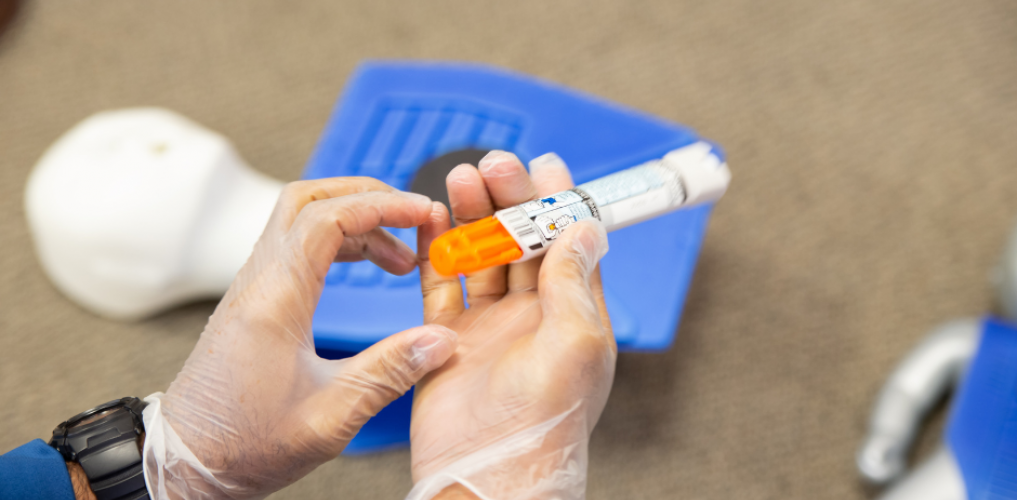
From September 2026, schools in England are expected to face new statutory requirements around allergy safety.
This includes stocking life saving adrenaline auto injectors, providing allergy awareness training for all staff, and publishing a dedicated allergy policy.
The Department for Education (DfE) consulted on this guidance earlier in 2026, and the government has signalled its intention to write these protections into law through an amendment to the Children's Wellbeing and Schools Bill (Allergy UK, 2026).
We offer two Allergy Awareness Training courses for schools and individuals.
Please note that the online course does not include practical training. If you would like hands on practice using an adrenaline auto injector, please consider our onsite course, delivered to groups of up to 16 delegates.
Onsite Allergy Awareness Training Course
Online Allergy and Anaphylaxis Awareness for Schools
The final statutory guidance had not been published, and Benedict's Law had not yet passed into primary legislation as of the time of writing. The DfE consultation closed on 15 May 2026, with final guidance expected to be published by July 2026 (Department for Education, 2026).
The precise requirements, including exactly what form staff training must take, are still to be confirmed.
What is clear is the direction of travel. Allergy safety in schools is moving from voluntary good practice to legal obligation.
Schools that begin preparing now with solid first aid training, clear policies, and stocked emergency medication will be in the strongest possible position when the final requirements land.
At Safe Haven Training, our Paediatric First Aid and Emergency First Aid at Work courses are a strong foundation for any school working towards that goal.
What Is Benedict's Law? Where Does It Stand Right Now?
Benedict Blythe was five years old when he tragically died from anaphylaxis at school in December 2021.
His parents founded the Benedict Blythe Foundation and spent four years campaigning for systemic change. Their campaign, Benedict's Law, reached a significant milestone in 2026.
What Has Been Announced
New statutory guidance, the DfE announced in March 2026 that it would replace its previous non statutory advice with mandatory requirements for all schools in England.
A public consultation on the proposed guidance ran from 5 March and closed on 15 May 2026. Final guidance is expected to be published by July 2026, ahead of coming into force in September 2026 (Department for Education, 2026).
Government commitment to primary legislation, in the House of Commons, Minister for Early Education Olivia Bailey confirmed the government intends to introduce its own amendment to the Children's Wellbeing and Schools Bill, stating: "We will put Benedict's Law on the statute book, with our own amendment to require schools to have and publish an allergy safety policy, to have regard to statutory guidance and to give powers to the Secretary of State to make regulations relating to allergy safety.
This will protect children with allergies in schools and ensure that our guidance can evolve as clinical advice changes." Olivia Bailey MP, Minister for Early Education (Allergy UK, 2026).
Schools, parents, and professionals were encouraged to share their views on the proposed guidance. The public feedback outcome can be viewed here.
What Has Not Yet Been Confirmed
- The final statutory guidance has not yet been published
- Benedict's Law has not yet passed into legislation
The exact specification for what staff allergy training must consist of, whether it must be a standalone allergy qualification, whether it can be incorporated into existing first aid qualifications, or what a combination approach might look like, has not been defined
Schools and training providers alike are waiting for that clarity.
When the final guidance is published, Safe Haven Training will update our courses and guidance accordingly. In the meantime, ensuring your staff are trained in paediatric first aid is a strong, sensible step and one that puts you well ahead of schools that have done nothing at all.
Why This Guidance Is Urgently Needed: The Scale of the Problem
Even before any law is passed, the case for better allergy safety in schools is overwhelming.
According to the BBC, 70% of schools in England did not have recommended allergy safeguards in place (BBC, 2026).
The Department for Education's records mention that almost 500,000 school days were lost last year due to allergy related illness or medical appointments.
What the Proposed Guidance Is Expected to Require
Based on the DfE's consultation proposals, the new statutory guidance is expected to introduce the following requirements for all schools in England (Department for Education, 2026).
Note that these are proposed requirements; the final guidance will confirm the exact obligations.
1. Spare Adrenaline Auto Injectors (AAIs) Stocked On Site
All schools are expected to be required to stock spare adrenaline auto injectors for emergency use.
Critically, this includes emergencies involving children with no prior allergy diagnosis up to 30% of severe reactions occur in children who did not previously know they were allergic (Benedict Blythe Foundation, 2026). All primary and secondary schools can already purchase AAIs from a pharmacy without a prescription (Department for Education, 2026).
Under the incoming requirements, doing so would become a legal obligation.
2. Allergy Awareness Training for All Staff
The proposals require allergy awareness training for every member of staff, not just designated first aiders. Based on the consultation, this training is expected to cover:
- Recognition of allergy and anaphylaxis symptoms
- Emergency response procedures
- Correct use of adrenaline auto injector devices
- Incident recording and lessons learnt processes
Important: The final guidance has not yet confirmed whether this training requirement will be met by existing first aid qualifications, such as Paediatric First Aid, whether it will require a separate, dedicated allergy course, or whether a combination will be needed.
Schools should watch for the final guidance in July 2026 and take advice before deciding which training route to follow.
3. A Published Allergy Safety Policy
Schools would be required to have and publish a separate, dedicated allergy safety policy distinct from the general medical conditions policy. This would need to set out how the school prevents allergic reactions, responds to emergencies, and manages training and AAIs.
4. Strengthened Medical Conditions Policy with Individual Healthcare Plans (IHPs)
Every school must have a published medical conditions policy. For pupils with diagnosed allergies, this must include an Individual Healthcare Plan (IHP), a personalised document recording specific arrangements for that child, such as their allergy management plan.
Under the proposals, these plans must be stronger, kept up to date, and clearly shared with relevant staff.
5. Improved Incident Recording and Reporting
Schools would be required to improve how they record, report, and learn from serious allergy incidents and near misses, creating a culture of continuous improvement rather than treating each incident in isolation.
The Existing Legal Framework Schools Already Work Within
Even before the new statutory guidance comes into force, schools already operate under existing legal duties around allergy and medical conditions.
| Legislation | Requirement |
|---|---|
| Section 100, Children and Families Act 2014 | Schools have a duty to support pupils with medical conditions (Department for Education, 2026) |
| Food Information Regulations 2014 | All school caterers must provide allergen information for all food served (Department for Education, 2026) |
| Proposed statutory guidance (Sept 2026) | Mandatory AAIs, allergy training, published allergy policy, strengthened IHPs, pending final publication (Department for Education, 2026) |
| Children's Wellbeing and Schools Bill (proposed) | Government amendment to write Benedict's Law into primary legislation, not yet passed (Allergy UK, 2026) |
Allergy safety does not begin and end in the classroom. The Food Information Regulations 2014 already require school caterers to provide allergen information for all food served.
If a school changes menus or substitutes food products for any reason, it must ensure pupils with allergies are still fully catered for (Department for Education, 2026).
The Food Standards Agency provides detailed allergen guidance for institutional caterers, including school specific advice on identifying pupils with allergies and cross referencing food against dietary needs (Department for Education, 2026).
How First Aid Training Supports Allergy Safety in Schools
While the exact training specification under the new guidance is still to be confirmed, one thing is not in doubt: staff who are trained in paediatric first aid are better placed to respond to an anaphylactic emergency than those who are not.
At Safe Haven Training, we offer two courses that are directly relevant to school settings:
Paediatric First Aid
The gold standard for anyone working with children. A Paediatric First Aid course covers:
- Recognising anaphylaxis and severe allergic reactions in children
- How and when to use an adrenaline auto injector
- Managing an unconscious child
- CPR on infants and children
- Choking, bleeding, burns, seizures, and more
Paediatric First Aid is a requirement for OFSTED regulated early years settings and provides your team with practical, hands on confidence in emergencies.
Book your Paediatric First Aid course with Safe Haven Training
Emergency First Aid at Work (EFAW)
A strong foundation in first aid for wider school staff, teaching assistants, lunchtime supervisors, office staff, and support workers.
The course covers recognising and responding to medical emergencies, CPR, managing unconscious casualties, and dealing with shock, bleeding, and choking.
View our Emergency First Aid at Work course
Both courses are nationally recognised, practically assessed, and result in an e certificate that meets Health and Safety (First Aid) Regulations 1981 requirements. Our pass rate is 100%, and certificates are issued within five working days.
Please note: We will monitor the DfE's final statutory guidance closely. Once the specific training requirements are confirmed, including whether a separate food allergy course will be required, we will update our guidance and course information accordingly.
Key Dates to Watch
| Date | What Is Expected to Happen |
|---|---|
| 5 March 2026 | DfE announces proposed statutory guidance; consultation opens |
| 1 May 2026 | DfE consultation closes |
| July 2026 | Final statutory guidance expected to be published |
| September 2026 | New requirements are expected to come into force in all schools in England |
(Department for Education, 2026; Allergy UK, 2026)
A Practical Pre September Checklist for Schools
With September 2026 approaching, it may be worth looking over these points to get a sense of where your school currently stands.
- Do you have a published allergy safety policy?
- Are all staff confident in using an adrenaline auto-injector?
- Does your school stock spare AAIs, including for children with no prior diagnosis?
- Is there a process for recording and reviewing allergy incidents and near misses?
- Are school catering records up to date with allergen information for every meal?
- Are new staff trained as part of their induction?
Book Your School First Aid Training
Allergy safety in schools might become a legal requirement in the coming months. Schools that invest in training now will be in the strongest possible position when the final guidance is confirmed.
Safe Haven Training offers:
- Nationally recognised Paediatric First Aid training
- Emergency First Aid at Work for all school staff
- Practically assessed courses with a 100% pass rate
- E certificates within five working days
- Inclusive, accessible training for every member of your team
We are keeping a close eye on the DfE's final statutory guidance and will advise schools on how our courses relate to the confirmed requirements as soon as they are published.
Book your school's first aid training with Safe Haven Training today.
References
1. Allergy UK (2026): Benedict's Law to be written into the Children's Wellbeing and Schools Bill.
2. Benedict Blythe Foundation (2026): About Benedict's Law.
3. Department for Education (2026): Stronger protections for children with allergies in school. GOV.UK.
4. Department for Education (2026): Allergy guidance for schools.
5. BBC News: Allergy training to become compulsory in schools in England.
6. Natasha Allergy Research Foundation (2026): Mandatory food allergy safety guidance for schools: what schools need to know?