

Heat Exhaustion vs Heatstroke: Knowing the Difference
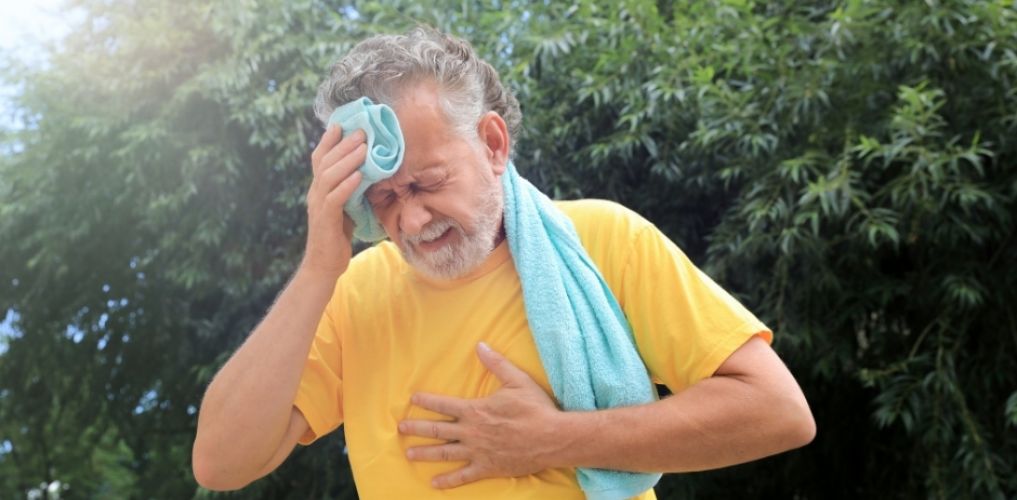
When the temperature climbs, our bodies work hard to stay cool. Sometimes they cannot keep up, and heat-related illness sets in.
The difference between heat exhaustion and heatstroke matters enormously.
One can usually be managed where you are, while the other is a medical emergency.
This guide explains how to tell them apart, what to do in each case, and when to call 999.
Knowing the signs could help you act quickly for a colleague, child, or stranger.
Find a first aid course near you
Why heat affects the body
In hot weather, the body loses fluid and salts through sweating. If those are not replaced, it begins to struggle to regulate its own temperature.
This is closely linked to dehydration, which happens when the body loses more fluid than it takes in (Dehydration, NHS).
Hot weather can also raise the risk of heart attack, stroke, and breathing problems (Beat the heat: staying safe in hot weather, GOV.UK).
Left unchecked, the early warning signs can tip into something far more serious. That progression is exactly why recognising the difference matters.
Here is a short video explaining the signs of heat exhaustion and heatstroke, and the simple steps to take if someone is affected.
It is a helpful watch before the warmer months arrive, and a useful reminder of what to look for.
Source: NHS and Pharmacist Virginia Chachati
What is heat exhaustion?
Heat exhaustion is the body's early response to overheating.
It is unpleasant and needs attention, but it does not usually require emergency help if the person can cool down within 30 minutes (Heat exhaustion and heatstroke, NHS).
The signs come on as the body strains to cope. They include:
- tiredness and weakness
- dizziness and headache
- feeling or being sick
- heavy sweating, with pale, clammy skin
- cramps in the arms, legs or stomach
- a fast heartbeat or fast breathing
- a high temperature and intense thirst
Symptoms are often the same in adults and children, though children may become irritable too (Heat exhaustion and heatstroke, NHS).
What is heatstroke?
Heatstroke is what happens when the body can no longer cool itself, and its temperature becomes dangerously high.
Unlike heat exhaustion, it is always a medical emergency.
The warning signs are distinct and serious.
Call 999 if you notice any of these (Beat the heat: staying safe in hot weather, GOV.UK):
- confusion and lack of coordination
- hot skin that is no longer sweating
- a fast heartbeat
- fast breathing or shortness of breath
- a seizure
- loss of consciousness
Heatstroke should also be suspected if someone is still unwell after 30 minutes of resting, cooling and drinking fluids (Heat exhaustion and heatstroke, NHS).
The key difference at a glance
The simplest way to think about it is this:
- Heat exhaustion is the body warning you that it is overheating, and it usually responds to cooling.
- Heatstroke is the body's cooling system failing altogether. The person stops sweating, becomes confused, and does not improve with rest.
If cooling works within 30 minutes, it was likely heat exhaustion. If it does not, treat it as heat stroke and call 999 (Heat exhaustion and heatstroke, NHS).
A quick note: heatstroke is not the same as a stroke
The names are similar, but these are different conditions:
- Heatstroke is caused by the body overheating.
- A stroke happens when blood supply to the brain is cut off.
Both are emergencies that need a 999 call. If you want to know the signs of a stroke specifically, see our separate guide on spotting the signs of a stroke.
First aid for heat exhaustion
If someone shows signs of heat exhaustion, the goal is to cool them down and rehydrate them.
Following these steps usually brings relief:
- Move them to a cool place, indoors with air conditioning or somewhere in the shade.
- Remove unnecessary clothing, such as a jacket or socks.
- Give them fluids to drink, such as cool water, a sports or rehydration drink, or water rich foods like ice lollies.
- Cool their skin. Spray or sponge them with cool water and fan them. Cold packs wrapped in a cloth, placed under the armpits or on the neck, help too.
Stay with the person until they recover. They should start to feel better within 30 minutes.
If you are struggling to treat the symptoms, contact NHS 111 (Heat exhaustion and heatstroke, NHS).
First aid for heatstroke
Heatstroke calls for immediate action.
Call 999 straight away if you see any warning signs, or if the person has not improved after 30 minutes of cooling (Heat exhaustion and heatstroke, NHS).
While you wait for the ambulance:
- keep moving them out of the heat and into a cool space
- continue applying cool water to the skin and fanning them (Beat the heat: staying safe in hot weather, GOV.UK)
- place them in the recovery position if they lose consciousness
- do not drive them to A&E yourself, as an ambulance is the safer choice
The 999 call handler will guide you through what to do.
First aid in a heatwave: looking out for others
During a heatwave, the safest approach is prevention, paired with keeping an eye on those around you.
Some people are far more vulnerable to the heat than others.
Higher risk groups include (Beat the heat: staying safe in hot weather, GOV.UK):
- older people aged 65 and over
- babies and young children
- people with conditions like heart problems, diabetes or breathing difficulties
- pregnant women
- people who work outdoors or do heavy manual work
Simple checks make a real difference:
- look out for family, friends and neighbours who may struggle to keep cool (Staying safe in extreme heat, UKHSA)
- make sure they have access to fluids and a cool space
- never leave anyone in a closed, parked vehicle, especially infants, young children or animals (Staying safe in extreme heat, UKHSA)
Preventing heat related illness
The good news is that both conditions are largely preventable.
The risk rises during hot weather and physical exertion, so a few habits go a long way (Beat the heat: staying safe in hot weather, GOV.UK):
- drink fluids regularly, aiming for pale straw coloured urine
- limit alcohol, since it dehydrates the body
- wear light, loose clothing and a wide brimmed hat outdoors
- avoid the sun between 11 am and 3 pm where possible
- plan exercise or gardening for the cooler morning or evening
- close curtains on sun facing windows, and open windows when it is cooler outside
Children should not do strenuous activity on very hot days. These steps keep your home comfortable and help prevent dehydration.
Confidence in the heat comes from knowing the signs
Telling heat exhaustion and heatstroke apart is not difficult once you know what to look for.
The dividing line is whether the person improves with cooling and rest. Under pressure, mistakes can happen, and that is understandable.
You might hesitate, or be unsure how serious things are. The safest approach is to act early and call 999 if there is any doubt.
This is where training proves its worth. In the courses we offer, including Emergency First Aid at Work and First Aid at Work, you learn to recognise emergencies like heatstroke and respond calmly and correctly.
We deliver training on-site at your workplace or at accessible venues across the UK.
Courses are designed around your team and your sector.
Want your team to feel ready when the temperature rises? Get a quote or check availability for first aid training today.
Refrences
1. GOV.UK: Beat the heat: staying safe in hot weather
2. NHS: Dehydration
3. NHS: Heat exhaustion and heatstroke
4. NHS: Heatwave: how to cope in hot weather
5. NHS: Recovery Position
6. UKHSA: Staying safe in extreme heat