

How to Give First Aid for a Knocked Out Tooth

A knocked out tooth can happen suddenly during sport, a fall, a workplace accident, or even a simple trip at home.
Knowing what to do in the first few minutes may improve the chances of saving the tooth.
Fast action matters. According to NHS guidance, adult teeth have the best chance of successful treatment when they are handled carefully and assessed quickly by a dentist (NHS, 2025).
The most important thing is staying calm.
Correct first aid helps protect the tooth while professional treatment is arranged.
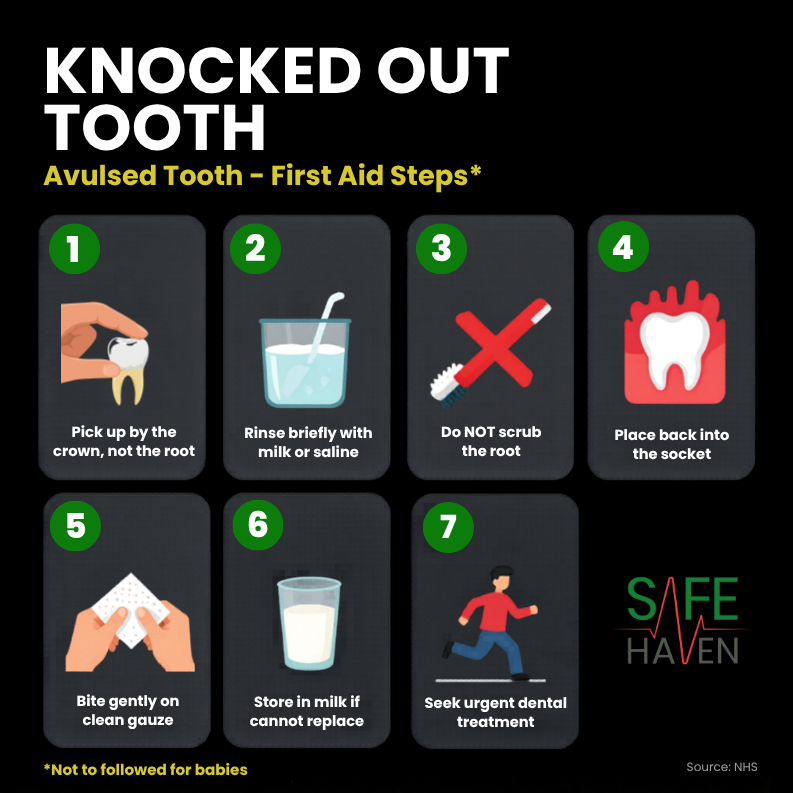
Infographic: First Aid For Knocked Out Tooth
What should you do if a tooth is knocked out?
If an adult tooth has been completely knocked out, follow these steps:
| Step | What to Do |
| 1 | Pick the tooth up by the crown, not the root |
| 2 | If dirty, rinse it briefly with milk or saline |
| 3 | Do not scrub or clean the root |
| 4 | Try to place the tooth back into the socket if possible |
| 5 | Ask the person to bite gently onto a clean cloth or gauze |
| 6 | If the tooth cannot be replaced, store it in milk |
| 7 | Seek urgent dental treatment immediately |
The crown is the white part normally visible in the mouth.
The root contains delicate tissue that helps the tooth reattach successfully.
The NHS advises avoiding touching the root wherever possible because this can damage important cells on the surface of the tooth (NHS, 2025).
Should you put the tooth back in?
Sometimes. If the injured person is conscious, calm, and able to cooperate safely, gently placing the tooth back into the socket may help protect it until dental treatment is available.
The tooth should slide into place naturally. Never force it. If it does not fit easily, store it safely instead.
This should not be followed for baby teeth.
What is the best way to store a knocked out tooth?
Milk is commonly recommended because it helps protect the surface of the tooth temporarily.
Saline solution may also help.
Avoid storing the tooth:
- In tissue or cloth
- In plain water for long periods
- Loose in a pocket or bag
- In disinfectant or alcohol
Keeping the tooth moist is important.
Dry storage may reduce the chances of successful treatment.
How quickly should you see a dentist?
A knocked out tooth always needs urgent dental care. NHS guidance recommends contacting a dentist immediately after the injury (NHS).
If you cannot contact your usual dentist, NHS emergency dental services may be available locally.
Emergency treatment options vary depending on the time of day and local NHS provision.
You can also use NHS 111 to find urgent dental support if needed.
What if there are other injuries?
Facial injuries sometimes happen alongside head injuries, bleeding, or suspected fractures.
Seek emergency medical help if the person has:
- Heavy bleeding
- Loss of consciousness
- Vomiting after the injury
- Difficulty breathing
- Severe facial swelling
- Suspected jaw fracture
- Signs of concussion
Children should always be monitored carefully after facial injuries.
Why does quick first aid matter?
The longer the tooth stays out of the mouth, the harder it becomes to save successfully.
The Dental Trauma Guide explains that the cells attached to the root begin to deteriorate when they dry out (The Dental Trauma Guide).
Good first aid helps protect the tooth during those critical early minutes.
Even when the tooth cannot be permanently saved, quick treatment may reduce complications and support future dental care.
Where do dental injuries commonly happen?
Knocked out teeth are common in:
- Contact sports
- School playgrounds
- Construction sites
- Warehouses
- Hospitality environments
- Cycling accidents
- Falls at home
This is one reason many workplaces and childcare settings include trauma management within first aid training.
First aid training for real emergencies
Knowing how to respond calmly under pressure can make a real difference during an emergency.
Safe Haven Training has delivered accredited first aid training since 2012.
Courses are taught by trainers with NHS and frontline emergency care backgrounds across more than 80 UK venues.
Relevant courses include:
Training aligns with current HSE guidance and recognised industry standards, including FAIB and Qualsafe Awards accreditation.
Safe Haven Training maintains a 99% pass rate, with certificates typically issued within 48 hours.
Book your Emergency First Aid at Work course with Safe Haven Training today and build the confidence to respond when someone needs help.
NHS dental charges may apply depending on the treatment required and the patient's eligibility for free NHS dental care (NHS).
Frequently Asked Questions
1. Can a knocked out tooth be saved?
Sometimes. Fast treatment improves the chance of successful reimplantation. Teeth treated quickly and stored correctly generally have better outcomes.
2. Should I clean a knocked out tooth?
Only rinse it gently if it is visibly dirty. Do not scrub the tooth or use chemicals because this may damage the root surface.
3. Can you store a tooth in water?
Plain water is not ideal for long term storage. Milk or saline is usually preferred because they help protect the tooth temporarily.
4. What happens if a child knocks out a baby tooth?
Baby teeth are not usually put back into place. A dentist should still assess the injury to check for damage to nearby teeth or gums.
5. How do I find emergency dental treatment?
NHS 111 may help direct you to urgent dental care services if your normal dentist is unavailable. Availability varies depending on location and time of day.
6. Does first aid training cover dental injuries?
Many accredited first aid courses include injury management, bleeding control, and responding to facial trauma. The level of detail varies depending on the course.
Final thoughts
A knocked out tooth needs quick, calm, and careful first aid. Small actions in the first few minutes may affect long term treatment outcomes.
Understanding how to protect the tooth, manage the injury safely, and seek urgent dental care helps you respond with confidence during an emergency.
Find a first aid course near you with Safe Haven Training and learn practical skills that help in real situations.
References
1. NHS: How much NHS dental treatment costs
2. NHS: How to find an NHS dentist in an emergency
3. NHS: Knocked out tooth
4. Gov.UK: Department of Health and Social Care
5. The Dental Trauma Guide: Public information on dental trauma management